


The Keep It Connected Model
The Transboundary Rocky Mountains of North America span an unparalleled geography of wide-open spaces. Home to iconic mountain ranges, free-flowing rivers, lush valleys, timberlands, and sage-covered hillsides, this landscape has supported wildlife and agricultural economies for generations. But, accelerating residential and commercial development, expanding transportation infrastructure, climate change, and extractive industries across the Rocky Mountain West are intensifying pressure on the landscape — driving new levels of urgency and demand for conservation solutions among landowners. This amazing landscape remains one of the few places on the planet where a concentration of wide-ranging wildlife like pronghorn, elk, grizzly bears, and wolverine, can still move across entire mountain ranges and valley bottoms.
Once connectivity is lost, it is nearly impossible and extraordinarily expensive to restore. Protecting it now preserves a continental-scale ecological engine that benefits multiple states, provinces and two nations.
Land trusts are seeing a surge in interest from landowners, and their project pipelines are rapidly expanding. Access to wildlife connectivity funding enables our land trust members to focus on private land conservation at the scale needed to keep wildlife habitat connected. Existing federal, state, and local funding cannot meet the increasing demand, and oftentimes, these sources require a match. Heart of the Rockies’ flagship program, Keep It Connected, curates the region’s most important, most threatened private lands for wildlife connectivity that are ready to conserve today.


What is Heart of the Rockies Initiative?
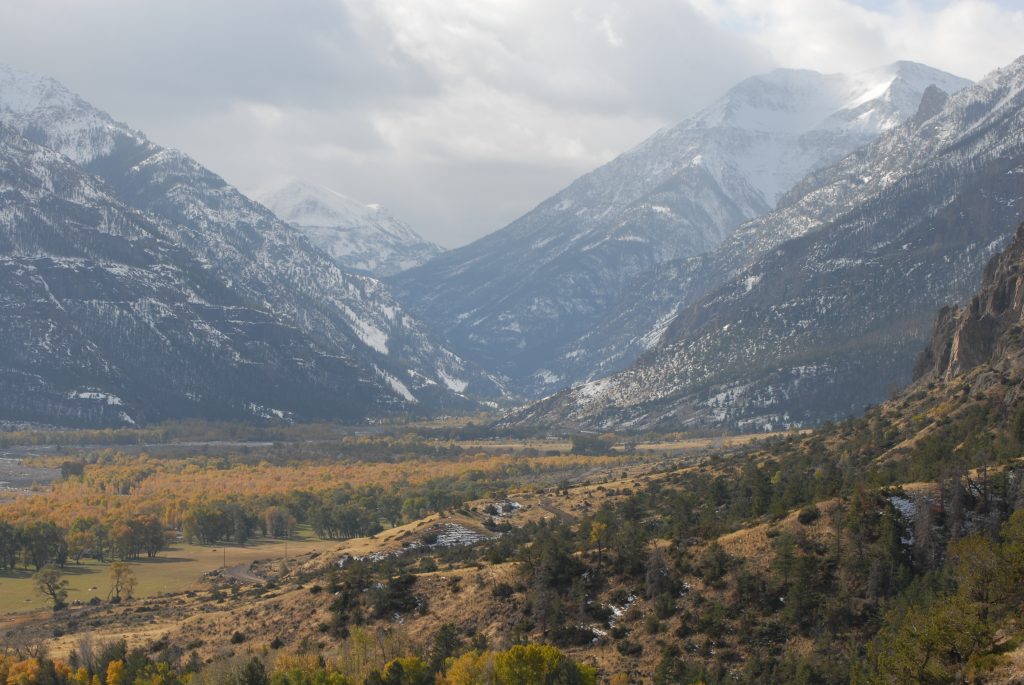
Heart of the Rockies Initiative is a unique, regional partnership of 31 land trusts working to conserve the most critical geography for large mammal biodiversity in North America. Our member land trusts operate with the highest standards of professionalism, ethics, and transparency, upholding rigorous national best practices that ensure lasting, credible conservation across the region. They serve five U.S. states and two Canadian provinces comprising the “heart” of the Transboundary Rocky Mountains. We utilize data, emerging science, transparent funder relationships, and decades of trust-building with land trusts working in local communities to permanently conserve the most biodiverse, highly critical private lands providing wildlife connectivity throughout this massive landscape. Heart of the Rockies’ integrated programs help keep the region’s family farms, ranches, and timberlands in family hands and in production, and assist rural communities in creating resilience, skills, and economic stability driven by outdoor recreation. We achieve this through capacity assistance, collaborative fundraising, partnership-driven access to the latest conservation research, and networking.

What is Keep It Connected?
Keep It Connected stands at the core of Heart of the Rockies Initiative’s work. We curate the region’s most important, most threatened private lands for wildlife connectivity that are ready to conserve today. Our portfolio of active projects helps private foundations and philanthropists easily identify the most critical, ready-to-protect, private lands that fit their values and mission. Since its inception in 2021, Keep it Connected has helped complete 85 conservation projects protecting over 371,000 acres throughout the region.
Why support keep it connected?
Our lands are disappearing at an alarming rate. Between 2015 and 2020, the Heart of the Rockies region lost an average of 100 acres of land each day to residential development (USGS, 2024). Montana alone has lost one million acres of undeveloped land to housing units over the last 25 years, an area equal to the size of Glacier National Park (Headwaters Economics, 2024). Housing trends, subdivision, and development, along with the related infrastructure needs, are steadily fragmenting some of North America’s most intact remaining habitat. As landscapes are broken into smaller patches, biodiversity can decline by up to 75%, undermining the resilience of entire ecosystems.
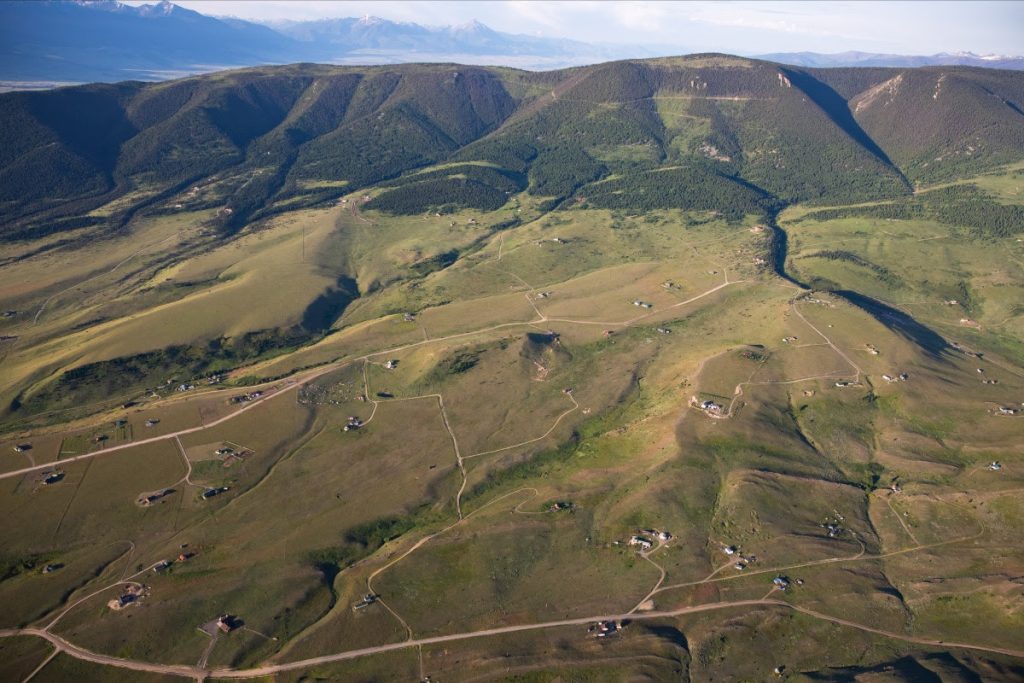
This region stands out nationally for its importance to wide-ranging wildlife, it is one of the most critical strongholds for large mammals on the continent. Elk, mule deer, pronghorn, grizzly bears, and other far-ranging species depend on expansive, connected landscapes to migrate, disperse, and adapt to a changing climate. Protecting large, intact tracts of land is one of the most effective ways to maintain these critical connections.
We have a narrow window — just 10 to 20 years — to secure landscape-level connections before fragmentation forecloses these opportunities. The decisions made in this decade will determine whether North America retains one of its last globally significant networks of open, connected lands, vital for wildlife.


Our role at Heart of the Rockies is to deeply understand our funders’ philanthropic priorities and connect them with active opportunities for durable wildlife conservation in the region. By vetting land trusts and their projects, we make it easy for funders to invest strategically and confidently across a large landscape through our network of land trusts. The projects in our portfolio are close to completion, with the final funding gaps left to fill. Our lean, efficient team amplifies impact, increasing both the pace and permanence of conservation while creating a single conduit for funders to access the most impactful, shovel-ready conservation projects, scaling the work of the region’s 400 land trust professionals.
Where we Work
Why We Work Here
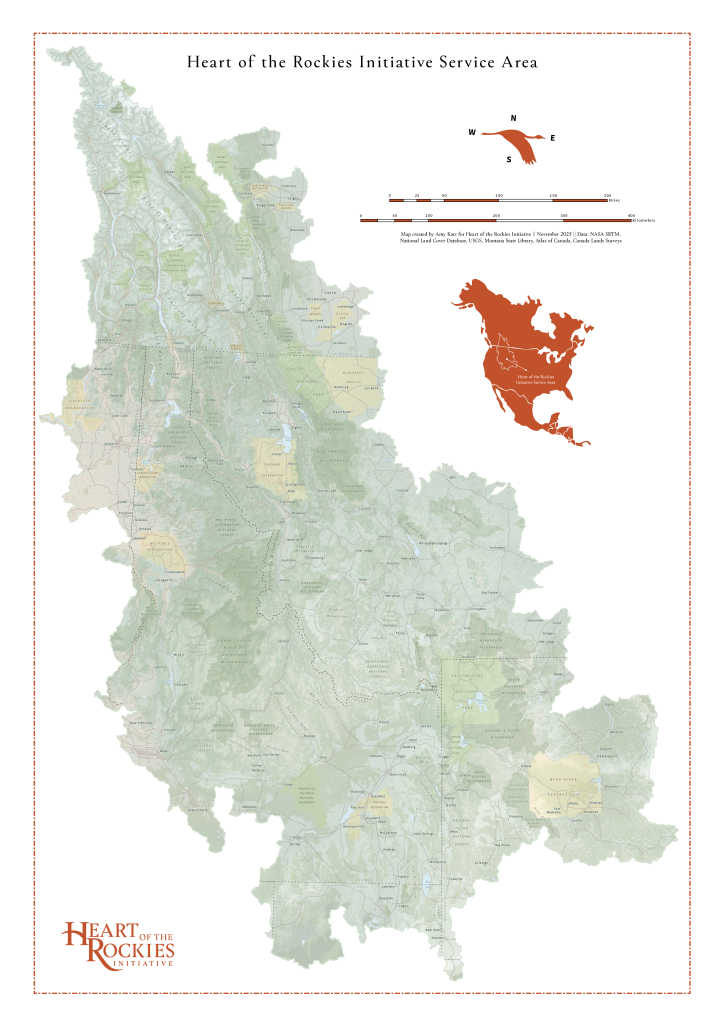
The Transboundary Rocky Mountains are one of North America’s last, best connected landscapes, providing habitat for the greatest number of large carnivores and ungulates on the continent, including moose, wolverine, mule deer, wolf, mountain lion, grizzly bear, black bear, bobcat, wolverine, lynx, caribou, bison, pronghorn, elk, and bighorn sheep. These species rely on these connected, open spaces for movement and dispersal, and in a region where most of the remaining open habitats in these high valleys are privately held, their permanent protection is vital for long term species persistence.


At this moment in time, this intact, relatively undeveloped landscape that is the Heart of the Rockies region is also experiencing unprecedented threat. Private lands are under significant pressure of conversion due to increased residential and commercial development, impacts from extractive industries, expanding transportation infrastructure, and impacts of climate change: between 2015 and 2020, the Heart of the Rockies region lost an average of 100 acres of private land a day (USGS 2024); one million acres of undeveloped land in Montana has been converted into housing since 2000, an area the size of Glacier National Park (Headwaters Economics 2024). Once private lands are developed, habitat is lost forever.
The urgency to protect this landscape for wildlife connectivity and species survival is real in the face of the extraordinary development and demographic pressure in the region. If this vital landscape is to continue to sustain and connect wildlife, we must meet this moment of urgency and work efficiently and effectively to conserve the private lands that are the heart of this crucial place. The Keep It Connected program was created to respond to this critical need.
We Curate Connectivity
Heart of the Rockies Initiative is a small, lean, efficient team that scales to approximately 400 land trust professionals throughout the region. We intentionally work behind the scenes; our goal is to be additive, as we work to increase the pace and permanence of connectivity conservation. We use the latest wildlife connectivity data to vet projects across our land trust partners to develop a portfolio of the most urgent wildlife connectivity projects. By building strong, trusted relationships with our 31 land trust partners, we save funders the time and resources of developing those connections themselves.

Every dollar donated to Keep It Connected passes directly through to land trust projects and is heavily leveraged — 25:1, on average — making each contribution reach dramatically further on the ground. Investing here isn’t about choosing this region over others; it’s about recognizing that this landscape offers one of the most irreplaceable and cost-effective conservation opportunities left in America.

“We commend the tangible solutions represented by Keep It Connected. The goal is ambitious but within reach if we work together. We cannot afford to hesitate. Now is the time to make a lasting difference by supporting Keep It Connected.”
— Liz Claiborne and Art Ortenberg Foundation
Keep It Connected Science Strategy
Our collective Keep It Connected team represents a diverse background of professional experience, spanning wildlife biology (including aerial survey and population monitoring experience), private land conservation, social science, and GIS and cartography. We evaluate new land trust projects based on the following quantitative and qualitative tools:
Connectivity and biodiversity
Keep It Connected leans heavily on current, peer-reviewed research to guide and legitimize our process, pulling from the best available wildlife habitat and movement data to assess projects. These data include telemetry from flight counts and short and long-term research studies, movement and connectivity models such as resource selection functions and Brownian bridge movement models, and estimated habitat ranges. We build and maintain relationships with state and provincial wildlife agencies, Tribal governments, and university biologists, who create and safeguard new and existing data. We overlay these spatial layers with land ownership and proposed conservation easement and fee title projects from our land trusts, creating accessible maps that identify which projects are most critical to wildlife connectivity (migration and dispersal) and fit the diverse priorities of our funders.
Ecosystem resilience
We consider topography, such as slope, aspect, cover, and elevation, as well as whether the property contains native vegetation and whether it is being grazed or farmed. These physical metrics can determine likelihood and suitability of carnivore and ungulate habitat, movement, and winter range. We also assess a project’s future habitat viability under a variety of conditions, thus assuring durability of permanent conservation investments in the face of long-term change. Additionally, larger properties and those with more diverse ecosystems can substantially contribute to climate resilience: this often factors into our decision-making, though small properties can be incredibly important for wildlife movement in specific pinchpoints or corridors.
Conservation context and community benefit
Keep It Connected operates across a much larger region than that of our land trust partners, allowing us to think strategically about private land conservation on a large landscape scale. When we curate new projects, we consider how the property fits into existing conservation work in the community and region and how it might complement local and regional connectivity and permeability. We consider whether it connects existing public or private conservation lands or whether it might serve as an anchor project for future conservation effort in a high-value area. Additionally, we assess potential community benefits of the project, such as sustaining working agricultural operations or providing public access.
Threat of conversion
Private lands are under significant threat of conversion due to increased residential and commercial development, impacts from extractive industries, expanding transportation infrastructure, and impacts of climate change: between 2015 and 2020, the Heart of the Rockies region lost an average of 100 acres of private land a day (USGS 2024). Keep It Connected works to accelerate the pace at which our land trust members complete durable, collaborative conservation, attempting to keep pace with the influx of people to the region and related land use conversion that accompanies that influx. We consider whether the project is currently listed on the market, is already subdivided, or is in an area experiencing significant growth, lending itself to a more demanding, urgent funding need.
Land trust, Tribes, and landowner knowledge
Though science and data is incredibly important to our decision-making process, we also lean heavily on our land trust members and their landowner partners who are intimately familiar with these places. Oftentimes, these partners have game camera footage, incredible wildlife stories, and generational knowledge that can never be gleaned by a map or a model. We also value and consider local Indigenous wildlife history and knowledge as it relates to a potential project.

How Keep It Connected Works
Keep It Connected was created to align funders’ philanthropic priorities with active opportunities for durable wildlife conservation in the Rocky Mountain West. To deliver on that vision, we work with our land trust members to present conservation-ready projects that prioritize wildlife connectivity value to interested funders. The program provides high-level landscape science and coordinated, strategic fundraising assistance to our 31 land trust members.
Keep It Connected Online Portfolio
The foundation of the program is an online portfolio of active land trust projects that provides private foundations and philanthropists a platform to browse and identify the most critical, ready-to-protect private lands that prioritize wildlife connectivity and align with their values and organizational missions. The password-protected, searchable platform highlights the best wildlife connectivity projects from our land trusts in the Heart of the Rockies Initiative network.
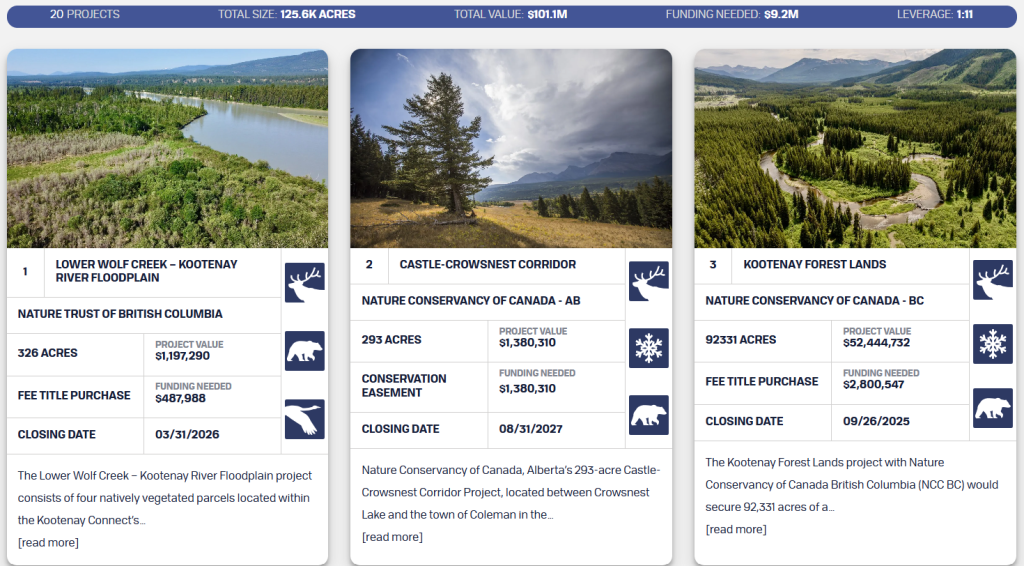
Curation Opportunities
The Keep It Connected team works with funders directly to thoroughly understand their priorities and to guide them through the portfolio, curating a custom selection of projects that best suits the funder’s goals. Program staff also work with state agency biologists and universities to ensure the best available science is informing their decision-making and storytelling. Through this process, Keep It Connected secures the resources necessary to fill funding gaps in ready projects, moving each to completion and continually bringing each member’s next project waiting in the wings into the spotlight.
How Keep It Connected is Meeting the Moment: What’s Needed Now
Local land trusts are the backbone of durable conservation—deeply rooted in their communities and advancing projects that are community-supported and community-responsive. With strategic investment through Keep It Connected, these local efforts are scaled to durable, landscape-scale biodiversity outcomes.
Conservation projects require time, persistence, and dependable capital. Consistent, flexible funding from Keep It Connected ensures that critical opportunities can be secured when they arise and carried across the finish line.
Large-landscape conservation succeeds when resources and vision are pooled. Multiple foundations can support a single project in the Keep It Connected portfolio, and funders with different priorities—capital, programmatic, or both—can each play a vital role in driving collective impact.

How You Can Support Keep It Connected

Schedule a meeting with our team to learn more about Heart of the Rockies Initiative and the Keep It Connected program.

Support the capacity of Heart of the Rockies Initiative’s capacity through operational funding.

Connect us with other funders or partners who share an interest in landscape-scale conservation.
Questions?
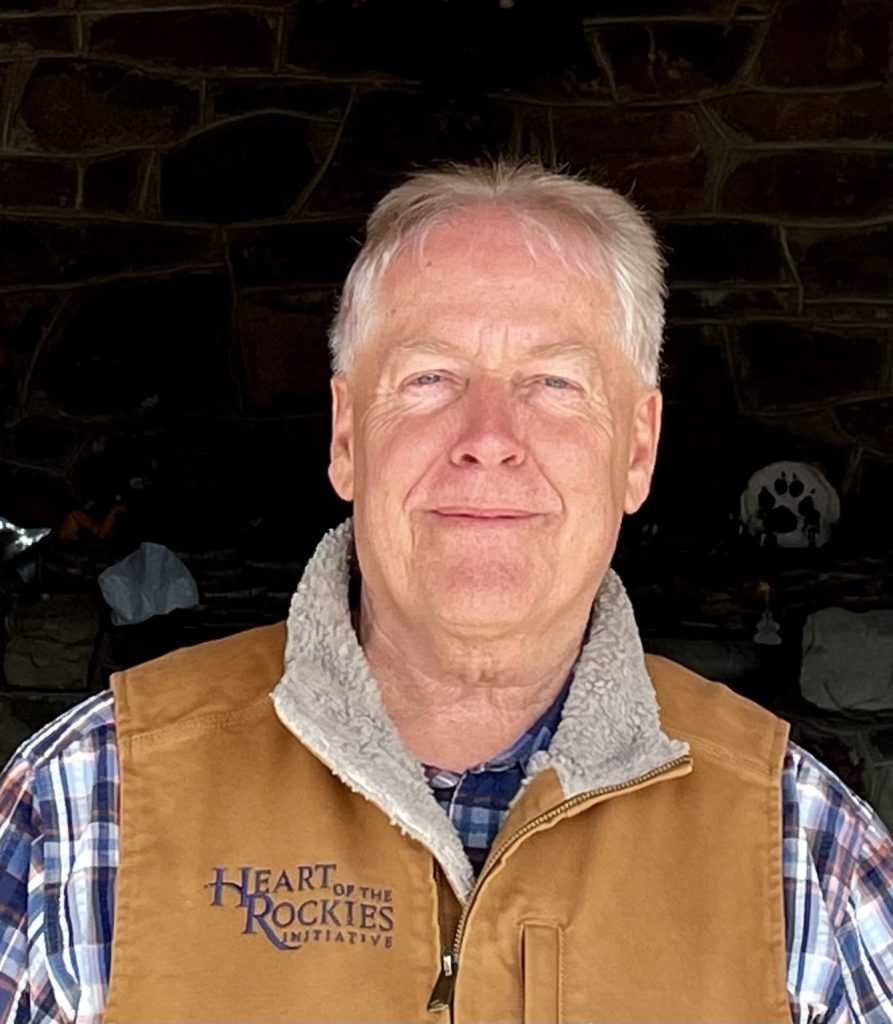
Please contact Jim Williams, our Certified Wildlife Biologist® and Partnerships Manager to learn more or schedule a meeting with the Keep It Connected team.
Photo credits: Wood River Land Trust, Hailey Hot Springs Conservation Easement, PC: Karen Bossick. Gallatin Valley Land Trust, Bozeman Pass, PC: Kestrel Aerial. Grizzly bear with cub, PC: Frank van Manen/USGS. Bull elk crossing Gardner River, PC: Diane Renkin. Pronghorn running in snow, PC: Tom Koerner/USFWS. MW Images Rockies. Wyoming Stock Growers Land Trust, Haw Draw Conservation Easement.